


Pressure regulator compliance depends on more than the regulator itself. Teams must ensure the entire pressure system is safe, properly designed, regularly maintained, and operated by trained personnel in line with UK HSE guidance and written schemes of examination.
Why are pressure regulators considered part of a pressure system?
-
In practice, the issue is rarely just the regulator itself
-
It’s the wider system around it
-
Under UK legislation, the focus is whether the pressure system is safe
Pressure regulators are often discussed in terms of performance, service life, or replacement interval.
But the more important question is:
“Do the people operating and maintaining them understand what is required to use them safely and compliantly?”
That matters because poor regulator performance is often tolerated for too long. Pressure drift gets adjusted away. Bottle changes become routine. Minor leaks are accepted as part of day-to-day operation. A regulator is replaced when confidence drops, rather than when the system has been properly assessed.
In practice, the issue is rarely just the regulator itself.
It’s the wider system around it – the valves, protective devices, relief path, purge arrangement, inspection regime, and the training of the people expected to operate it safely.
Pressure regulators are part of a pressure system – and that changes the conversation
Under UK pressure systems legislation and HSE guidance, the focus isn’t simply on whether a regulator is still working. The focus is whether the pressure system is safe under its operating conditions, whether safe operating limits are known, and whether suitable examination, maintenance, and protective measures are in place.
That’s an important distinction.
Key factors affecting regulator decisions:
-
The gas involved
-
The operating pressure and temperature
-
The application risk
-
The condition of the wider system
-
The protective devices fitted
-
Whether the system has been designed so that inspection, isolation, venting, testing, and maintenance can be carried out safely
This is where compliance, safety, and training come together.
What is the difference between a written scheme of examination and routine maintenance?
- A written scheme of examination defines what must be examined
- It is not a substitute for routine maintenance
- Routine maintenance identifies developing issues
One of the most important points in the HSE guidance is that many pressure systems require a written scheme of examination.
That written scheme should identify the parts of the system to be examined, the nature of the examination, the interval between examinations, the preparatory work needed to examine the system safely, and the protective devices that must be included.
But there’s another point that’s just as important.
A written scheme of examination is not a substitute for routine maintenance.
That’s crucial, because some teams assume that if a system is covered by formal examination requirements, the maintenance side is effectively taken care of. It isn’t.
Routine inspection, testing, and maintenance still matter because they’re what help to identify:
-
Leakage
-
Creep
-
Contamination
-
Wear
-
Unstable operation
-
Unsafe operating practices before they become more serious problems
In other words, statutory examination helps demonstrate that the system is fit to remain in service. Routine maintenance helps keep it safe and reliable between those examinations.
Why does regulator safety depend on the wider system design?
- A pressure regulator should not be considered in isolation
- Safe operation depends on system design
- Engineered systems improve repeatability and safety
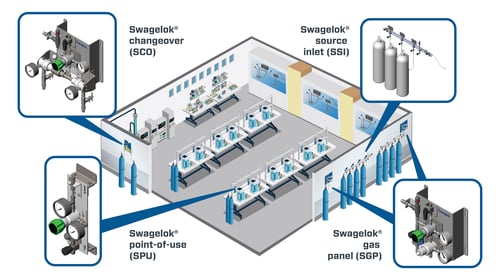
If a team can’t safely isolate a cylinder, vent the system down, confirm the condition of the assembly, and return it to service in a controlled way, then the issue isn’t just regulator performance. It’s system design.
That’s one of the clearest lessons from engineered gas distribution panels.
When systems are designed properly, they can make routine operations safer, quicker, and more repeatable. System design features that support safe, repeatable operation:
-
Clear isolation points
-
A defined vent or purge path
-
Appropriate relief protection
-
Suitable valve arrangement around the regulator
-
Easier access for testing and maintenance
-
Clearer labelling for operation and troubleshooting
That’s what ‘right first time’ looks like in practice.
It’s not simply choosing a regulator with the right pressure range. It’s building a system that can be operated, checked, maintained, and, where required, purged safely by trained personnel.
Why is training essential for pressure regulator compliance?
-
Training is required under HSE guidance
-
Lack of understanding leads to risk
-
Poor performance is often normalised
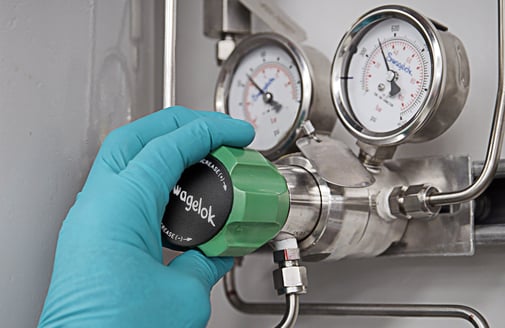
HSE guidance is clear. Everybody operating, installing, maintaining, repairing, inspecting, or testing pressure equipment should have the necessary skills and knowledge to do the job safely.
That shouldn’t be treated as a generic compliance statement. It has direct practical consequences.
Knowledge required for safe pressure regulator operation:
-
How a regulator should behave in service
-
What creep looks like
-
What droop is telling them
-
How contamination affects the seat
-
When upstream filtration matters
-
How to isolate and depressurise safely
-
Or how to leak test correctly…
…then they’re more likely to normalise poor performance, miss early warning signs, or create risk during routine intervention.
This is one reason pressure problems often persist. People put up with them because they don’t fully appreciate what the regulator is capable of doing when it’s correctly selected, protected, and maintained.
Training helps close that gap.
When do regulator performance issues become safety risks?
- Regulators do not need to fail to create risk
- Performance issues can indicate safety concerns
- Creep and contamination are key examples
Performance issues are often safety issues in disguise. A regulator does not have to fail completely to become a concern.
Common signs of poor pressure regulator performance:
-
Pressure instability
-
Repeated adjustment
-
Creep
-
Leakage
-
Difficulty during bottle changeover
-
Uncertainty about whether the system has been vented and isolated correctly
These are often treated as operational nuisances. They should be taken more seriously than that.
For example, creep can allow outlet pressure to rise over time if the poppet doesn’t seat correctly. Contamination and poor filtration are common contributors. In the wrong application, that’s not just a performance issue – it’s a safety issue.
The same applies to poor purge practice, inadequate protective devices, or systems that make maintenance awkward. If a system is difficult to isolate and check safely, the risk increases every time somebody intervenes.
How does system design improve maintenance and compliance?
-
Maintainability should be designed in from the start
-
System layout affects safety and usability
-
Quality supports long-term operation
Better maintenance starts with better design. One of the strongest practical points to remember is that maintainability should be designed in from the start.
Key design considerations for maintainability:
-
Upstream filtration to protect regulator internals
-
Minimal unnecessary leak paths
-
Gauges and components arranged for easier inspection
-
Labelling for safer operation
-
Valve layouts that support safe isolation
-
Assemblies that are easier to troubleshoot and maintain
This is where quality becomes especially important.
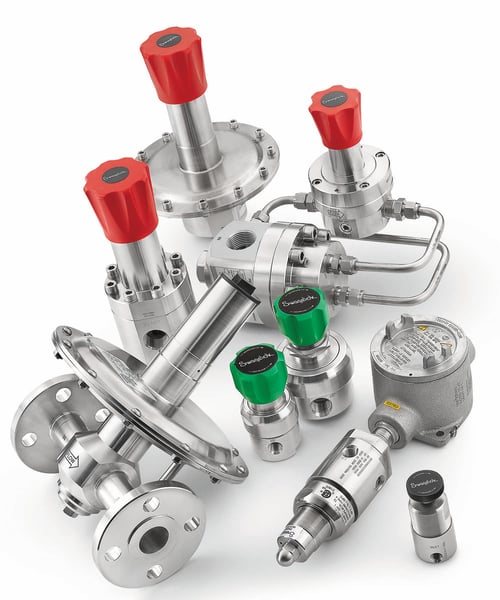
A system built from suitable components, assembled correctly, tested properly, and designed with maintenance in mind is easier to operate safely over the long term. That supports compliance, reduces avoidable intervention, reduces downtime, lowers total cost of ownership and helps improve service life – rather than treating replacement as the only safe option.
What is the most important question to ask about pressure regulator compliance?
-
Replacement is not the primary question
-
Understanding system operation is more important
-
Leads to better decisions
What’s the real question you need to be asking?
The most useful question is not:
“How often should we replace this regulator?”
Instead, it’s:
“Do we understand how this pressure system should be operated, examined, maintained, and protected – and have we trained people accordingly?”
Areas influenced by better compliance understanding:
-
Inspection frequency
-
Maintenance planning
-
Operator training
-
Regulator selection
-
Protective devices
-
And whether the current system is genuinely fit for purpose
Final thought
Pressure regulator safety is not only about the regulator.
It’s about the whole pressure system, the way it has been designed, the protective devices around it, the written scheme where required, the maintenance regime behind it, and the competence of the people working on it.
Get those things right, and better reliability, longer service life and lower lifetime costs often follow.
Pressure regulator training
Discuss your pressure system challenges with our technical specialists and explore training options for your team.

