

Understanding Flow Curves
A flow curve shows how a regulator maintains outlet pressure as downstream flow changes.
-
Vertical axis: regulator outlet pressure
-
Horizontal axis: flow rate
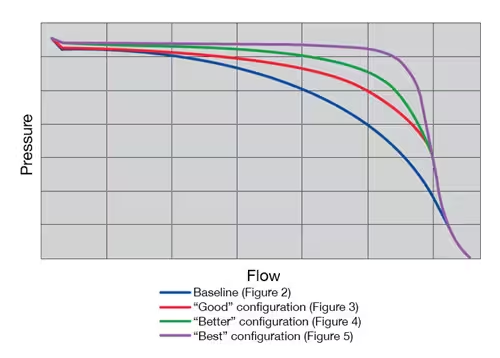
Figure 1: The above chart illustrates different flow curves using different pressure regulation configurations:
-
A simple spring-loaded regulator (Option A - Baseline - Foundational design)
-
A dome-loaded regulator and a pilot regulator (Option B – Good - Performance enhanced design)
-
A dome-loaded regulator and a pilot regulator with an added feedback line to the dome-loaded regulator (Option C – Better - Process-enhanced design)
-
A dome-loaded regulator and a pilot regulator with an added feedback line to the pilot regulator (Option D – Best - Lifecyle-optimised design)
The flattest section of the curve indicates where the regulator delivers the most consistent pressure. Operating in this region reduces pressure variation and manual intervention. In gas distribution panels, regulators must be selected and configured so that the system operates within the flatter portion of their flow curves, ensuring stability under normal and peak demand.
-
Outlet pressure drift during high flow
-
Increased manual adjustment
-
Inconsistent delivery pressure at point of use
-
Reduced confidence in process stability
Optimising regulator flow performance
Not all regulators perform equally under changing demand. Below is how common configurations compare in gas distribution applications.
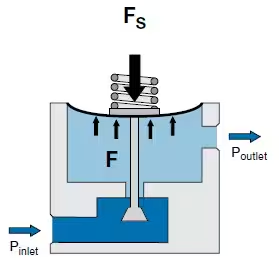
Foundational design: Spring-loaded regulator
A traditional spring-loaded regulator uses mechanical spring force to balance downstream pressure. As flow increases:
-
The Outlet pressure drops
-
the poppet lowers to allow more flow. Change As flow increases to flow demand increases.
-
The spring relaxes slightly
-
The outlet pressure falls proportionally
-
The set point may require manual correction
Suitable for:
-
Stable flow demand
-
General industrial use
-
Applications where minor variation is acceptable
While reliable and cost-effective, this configuration typically exhibits the most noticeable droop under changing flow conditions.
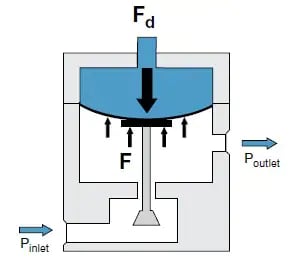
Performance enhanced design: Dome-loaded with with pilot
Replacing the spring with a pressurised dome significantly improves dynamic control. In this configuration:
-
A pilot regulator maintains dome pressure
-
The dome applies consistent loading force
-
Flow increases are automatically compensated
Performance benefit:
-
Reduced droop
-
Improved pressure stability
-
Less manual adjustment
This configuration performs well in panels where flow demand fluctuates significantly.

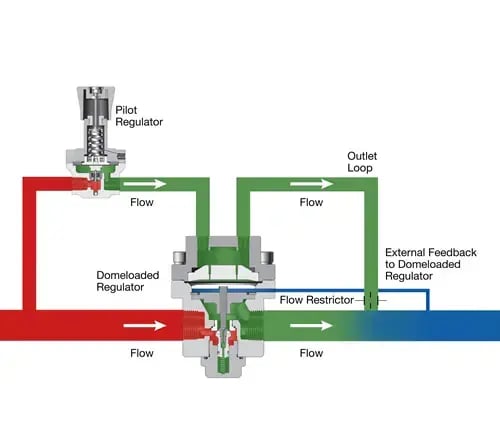
Process-enhanced design: Dome-loaded with external feedback
Adding external feedback further enhances control accuracy. Here, downstream pressure is routed back to the regulator sensing area, allowing it to respond to true process pressure rather than only internal regulator conditions.
Performance benefit:
-
Flatter flow curve
-
Compensation for pressure losses inside the panel
-
Improved accuracy at the point of use
This becomes particularly important in longer distribution runs or systems where pressure stability directly impacts product quality.
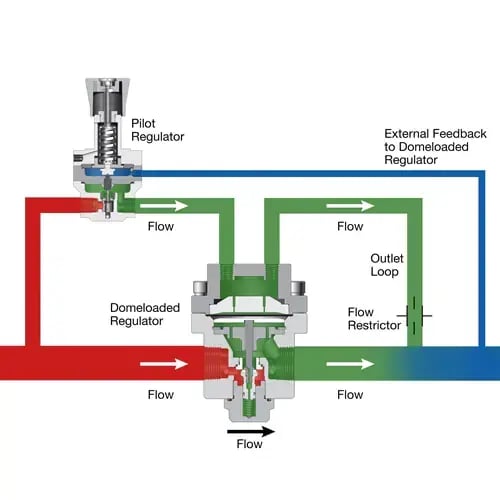
Lifecycle-optimsed design: Pilot with downstream feedback
For the highest level of stability, downstream feedback is connected directly to the pilot regulator. This allows:
-
Real-time sensing of actual downstream pressure
-
Continuous dome pressure adjustment
-
Minimal droop across wide flow ranges
Best suited for:
-
High-flow systems
-
Hydrogen applications
-
High-purity processes
-
Analytical and semiconductor environments
This configuration produces the flattest achievable regulator performance curve in practical industrial systems.
Why performance design matters in gas distribution panels
Performance slowly drifts:
-
Cylinder pressures vary
-
Demand increases
-
Additional users are connected
-
Operating pressures shift
If regulator configuration does not match these evolving requirements, droop and instability become embedded into daily operation. Performance-focused panel design reduces:
-
Unnecessary manual intervention
-
Outlet pressure drift
-
Process variability
-
Long-term maintenance burden
Linking performance to lifecycle thinking
Performance cannot be separated from lifecycle design. A panel engineered for stable pressure control:
- Extends regulator service life
- Reduces replacement frequency
- Minimises gas waste
- Simplifies inspection processes
If you are reviewing regulator replacement cycles or five-year inspection requirements, it may also be time to review configuration performance.

.png "Book a gas distribution system review")
