
Four qualities to look for in fittings for hydrogen fuel cell technology
Charles Hayes, Lead New Product Development Engineer, and Charles Erml, Product Manager, Swagelok
One of the most formidable challenges in the development of safe, reliable, and leak-tight hydrogen fuel cell vehicles and infrastructure is the nature of hydrogen itself.
Hydrogen is a small-molecule gas. It can easily escape through the tiniest of crevices and diffuse into the materials designed to contain them. In the transportation marketplace, hydrogen must also be stored at pressures in excess of 700 bar to achieve the necessary energy density on a vehicle. And at refuelling stations, rapid thermal and pressure changes can also impact system integrity as hydrogen leaves storage tanks and decompresses.
These circumstances highlight the importance of uncompromising performance in fittings that join critical parts of high-pressure hydrogen fuel systems. Fittings for hydrogen fuel cell technology must demonstrate a few critical characteristics for long-lasting reliability. While traditional cone and thread fittings have been used in these applications, there are higher-performing options available today. In this post, we will take a close look at a few specific fitting design characteristics that make for ideal performance in hydrogen technology:
 Seal tightness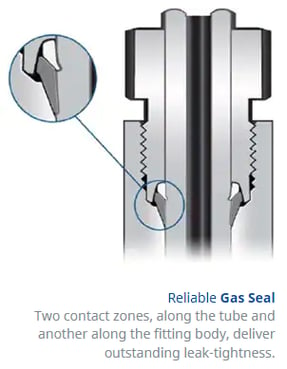
Given hydrogen’s tendency to slip through the tiniest of openings, gas seal tightness and leak resistance are some of the most important performance criteria for a fitting.
Many traditional tube connections are sealed along a single line of contact on a narrow surface. While this seal may be sufficient for many liquids and some gases, hydrogen’s unforgiving nature can compromise it once in operation. Vibration can also be challenging for a single-line seal.
A better design for hydrogen containment involves two lines of contact across longer sealing surfaces—one along the tube, and another along the fitting. These contact surfaces should be angled slightly, providing the optimized stress level to maintain an uncompromising seal. Certain styles of two-ferrule tube fittings can deliver this kind of seal integrity.
 Grip Strength
The fitting’s grip strength on the tube is another key performance attribute that ensures the fitting can withstand the high pressures required for hydrogen refuelling as well as the significant vibration that can occur in a moving vehicle.
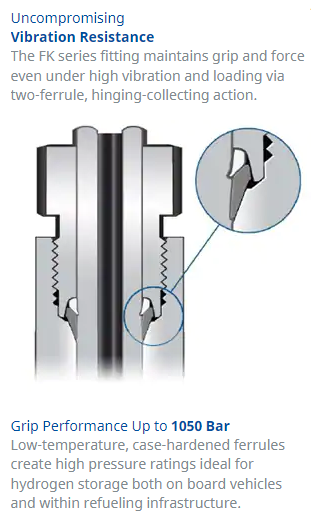 A colleted mechanical grip using two ferrules is an ideal design for a hydrogen fitting to create a robust grip. A hardened front ferrule can enable the fitting to physically bite into the tubing, creating a very high pressure rating. Meanwhile, a unique back ferrule design allows for a slight amount of movement in the fitting (called “spring back”) while maintaining grip and force. This type of design creates robust vibration resistance, ideal for both on-vehicle operation and use on refuelling infrastructure, where compressors and dynamic conditions can create significant vibration.
A mechanical, two-ferrule design that allows for spring back also helps fittings withstand dramatic thermal changes that can cause materials to grow or shrink. During refuelling, hydrogen gas temperatures may vary from as low as -50ºC to ambient temperatures, causing issues in conventional cone and thread fitting performance.

Simple installation
Proper fitting design is critical for reliable in-use performance. It can also lead to significant installation and assembly efficiencies for hydrogen fuel cell vehicle OEMs and hydrogen infrastructure developers.
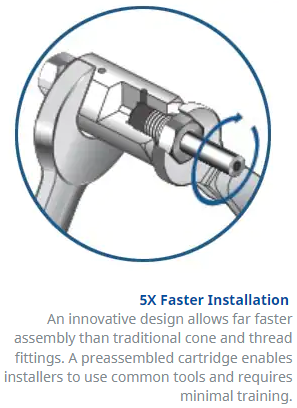
Some available mechanical grip fittings are designed with pre-assembled cartridges. This enables installers to use common tools and requires minimal training to achieve rapid, error-proof assembly. When compared to traditional cone and thread fittings, which have traditionally been used in hydrogen refuelling systems, an innovative design like the Swagelok® FK series fittings show significant installation and assembly benefits.
A reliable cone and thread connection requires specialised equipment, high levels of installer skill, and typically takes 5x longer to assemble and test than the Swagelok FK series. Vehicle manufacturing is all about speed, and ease of installation will be critical as hydrogen infrastructure scales up. The right fitting technology can accelerate both.

Material integrity
Corrosion control is important in any application where tube fittings are expected to provide reliable performance. Corrosion occurs when a metal atom is oxidised by a fluid, leading to a loss of material in the metal surface. This loss reduces the wall thickness of a component and makes it more prone to mechanical failure. In hydrogen transportation applications, both vehicles and refuelling pumps are regularly exposed to adverse weather conditions, making it especially important that materials of construction can resist problematic corrosion throughout a system’s lifetime.
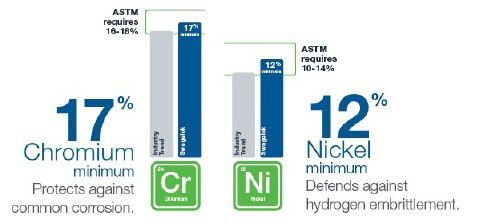
Higher concentrations of chromium and nickel in fluid system components can help defend against common corrosion and hydrogen embrittlement by retaining greater ductility in critical components. The American Society for Testing and Materials (ASTM) requires a minimum of 10% nickel in 316 stainless steel. However, it has been shown that higher-quality 316 stainless steel with 12% minimum nickel is better suited for the unique challenges of hydrogen.

Meeting the needs of hydrogen systems
While there are a variety of compression tube fittings and other styles that may be applicable to hydrogen fuel
systems, very few are designed to satisfy the many unique performance demands hydrogen applications require.
Swagelok’s FK series fittings are the exception. With a patented design, EC-79 & EIHP certifications, and pressure ratings of up to 1050 bar, the FK series was engineered specifically for use in hydrogen applications. Made from 316 stainless steel with 12% minimum nickel content, they have found use in a wide variety of industries and applications since their introduction, and remain an optimal choice for today’s—and tomorrow’s—vehicles and infrastructure.
The long-term viability of hydrogen transportation will depend on safe, reliable, and durable hydrogen vehicles and infrastructure. Selecting and specifying the right components for critical systems can help achieve these goals. Interested in learning more? Contact Swagelok today to discuss how we can help with your transportation needs.