

Is your gas distribution system still fit for purpose?
Gas distribution systems are often installed once and then left to run for years without review. Regulators are replaced periodically. On the surface, they appear to be functioning as expected. But legacy panel designs can quietly introduce risk exposure that aren’t immediately visible. Bottles are changed when they look low. Minor pressure instability is adjusted at the knob.
But do you step back and ask:
Is this system still designed for how we use it today?
Over time, small inefficiencies and design compromises can quietly increase cost, maintenance burden, and operational risk.
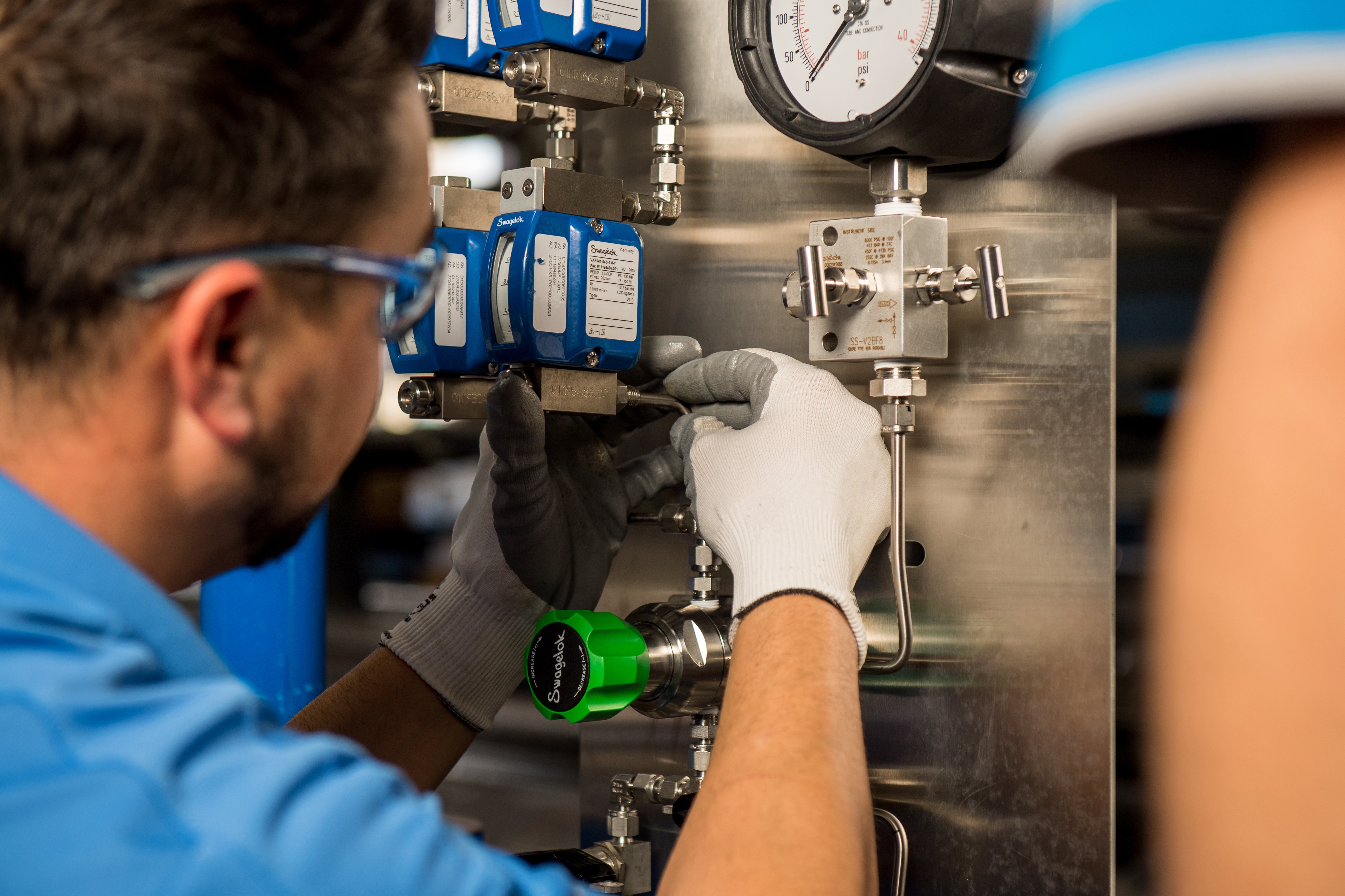
Why performance matters in your gas distribution system?
A gas distribution system can be compliant and still under perform. If outlet pressure drifts under flow demand, regulators require frequent adjustment, or stability depends on manual intervention, the issue may not be condition, it may be configuration.
System reliability includes how a panel performs under load, not just how it appears during inspection. Explore how regulator design affects pressure droop and flow stability in high-demand systems.

The 5-year question: Inspect or Replace?
BCGA (British Compressed Gas Association) Codes of Practice CP7 and CP47 recommend that pressure regulators and safety devices on gas systems should be inspected at-least annually and replaced every five years by a competent person or in accordance with the manufacturer’s instructions.
In practice, you may find challenges around:
-
- Defining what “competent” means
- Establishing a clear inspection method
- Documenting compliance for audit purposes
When those answers are unclear, many organisations default to precautionary replacement.
What happens instead:
Perfectly serviceable regulators are removed and scrapped simply because replacement feels safer than inspection. While understandable, that approach can increase:
- Rising maintenance costs
- Excess metal waste
- Unplanned downtime
- Extra work for procurement teams
In many inert gas applications, such as nitrogen, argon, or compressed air, regulators can remain stable and functional for decades when properly designed, installed, and protected.
The key question is not just when you replace, but whether you know how to assess correctly.
Design matters more than you realise

Some panels are assembled manually on-site from individual components rather than designed as an integrated system from the outset.
Why it matters:
- Individual parts may not be optimised for each other
- Risk of misalignment or improper installation increases
- Harder to implement consistent safety and inspection processes
Impact:
- Unexpected leaks or pressure issues
- Higher maintenance and rework costs
Decisions are made based on cheapest components or installation rather than long-term reliability.
Why it matters:
- May lead to lower-quality regulators, valves, or fittings
- Short-term savings often result in higher costs due to replacement, downtime, or inefficiency
Impact:
- Regulators may need replacing unnecessarily (precautionary replacement)
- Operational downtime increases
- Material waste and environmental impact rise
Supply Pressure Effect (SPE) is the impact of fluctuating source pressure on downstream output pressure. Panels that ignore SPE may not maintain stable pressure.
Why it matters:
- Single-stage regulators or unbalanced panels cannot compensate for variations in supply pressure
- Critical processes relying on steady pressure can fail or produce inconsistent results
Impact:
- Pressure instability as bottles deplete
- Inconsistent outlet pressure at points of use
- Potential product quality issues in labs or manufacturing
A single-stage regulator takes the full pressure drop in one step. Two-stage regulation spreads this across two regulators.
Why it matters:
- Single-stage regulation is less precise and more susceptible to Supply Pressure Effect (SPE)
- Two-stage regulation provides smoother, more stable output pressure
Impact:
- Manual interventions during changeovers
- Pressure spikes or drops that can damage sensitive equipment
- Reduced system reliability and safety margin
Why engineered design solves these issues
A well-engineered gas distribution panel is not just about parts, it’s about the whole system:
Supply Pressure Effect Management (SPE)
Supply Pressure Effect (SPE) management ensures stable output regardless of fluctuating supply pressure.
Automatic changeover
Balanced automatic changeover reduces human error and ensures continuous supply.
2-stage regulation
Two-stage regulation where needed provides stable and safe pressure delivery.
Upstream filtration
Upstream filtration protects regulators and downstream equipment from contamination.
Material selection
Correct material selection prevents corrosion or gas incompatibility (especially important for hydrogen or toxic gases).
Inspection
Structured inspection methodology ensures regulators are checked correctly without unnecessary replacement, reducing cost and waste.
The hidden cost of “good enough”
Your system may be working. But working and optimised are not the same. It’s worth asking:
-
How much gas is replaced early to avoid bottle depletion risk?
-
How many regulators are scrapped on a fixed cycle rather than condition?
-
How often are outlet pressures adjusted to compensate for drift?
-
How much time is spent managing manual changeovers
Individually, these seem minor. Over 10–20 years, they compound. A gas distribution system designed for life cycle reliability reduces:
-
Replacement frequency
-
Maintenance intervention
-
Gas waste
-
Operational uncertainty
-
Administrative burden associated with compliance
When your process changes, but the panel doesn’t
Gas systems are rarely static. Over time:
-
Gases change
-
Demand increases
-
New equipment is added
-
Pressure requirements shift
Yet the original panel configuration often remains unchanged. This becomes particularly important for:
-
Hydrogen applications (embrittlement and permeation considerations)
-
High-purity or semiconductor environments
-
Toxic or corrosive gas systems
-
Applications requiring stable pressure control
A panel that was suitable ten years ago may no longer be optimal today.
Moving from replacement to life cycle thinking
Instead of asking yourself: “Do we need a new regulator?” A more valuable question to ask is: “Is our system designed for long-term reliability or just short-term compliance?” Life cycle thinking means you:
- Design once, correctly
- Define inspection procedures clearly
- Avoid unnecessary replacement
- Account for long-term stability
- Reduce sustainability impact
In many cases, small design changes, or simply reviewing the current setup, can unlock meaningful savings and reduce risk.
A simple starting point
If you haven't reviewed your gas distribution system in the last five years, consider:
- Do we have a documented inspection process?
- Are we replacing regulators by default?
- Are outlet pressures stable during bottle depletion?
- Are we operating at higher pressures than necessary inside the building?
- Do we understand the total life cycle cost of our current setup?
If the answer to any of these is unclear, it may be time for a review. Not to replace everything. But to ensure the system is still fit for purpose.
Take a proactive approach
Gas distribution systems rarely fail dramatically, they tend to drift into inefficiency, over-maintenance, or misalignment with your current needs. Waiting for an issue to arise can increase costs, downtime, and risk unnecessarily. Sometimes the right answer is to change nothing. But it’s worth knowing. Our consultative approach can help you:
-
Understand how your current system performs today
-
Identify potential improvements before they become issues
-
Simplify compliance and reduce maintenance burden
-
Explore life cycle optimisation opportunities
At Swagelok Central UK, we combine engineering expertise with practical insights to help you understand your gas distribution system, ensuring it remains safe, efficient, and fit for purpose today and tomorrow. Our consultative approach focuses on long-term reliability, not short-term fixes. Because understanding your system is the first step toward optimising it and operating with confidence.


.png)