

Understanding hydrogen embrittlement
Hydrogen embrittlement occurs when atomic hydrogen diffuses into a metal and accumulates at areas of stress or microstructural weakness. The result is a reduction in fracture and fatigue resistance, particularly in systems exposed to pressure cycling, vibration, or repeated loading.
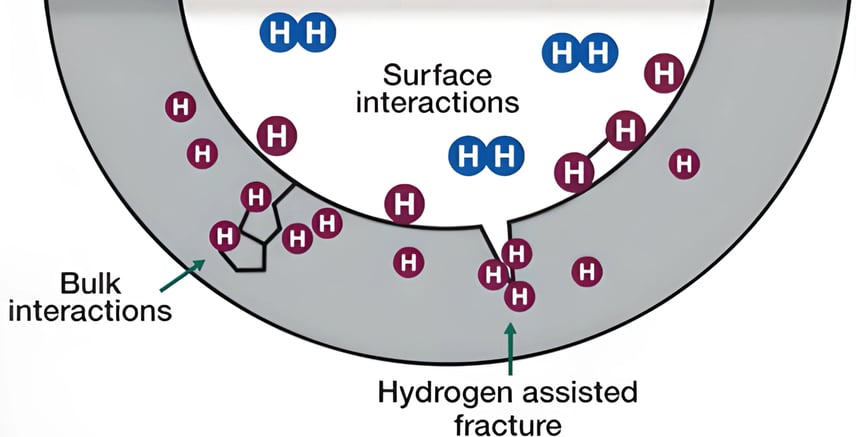
Figure 1: Hydrogen molecules can dissociate to atomic hydrogen and penetrate metals.
This is an important distinction. A component may appear suitable in static conditions but still prove less reliable in real operating environments if cyclic stresses are present. For hydrogen systems, material selection should therefore always reflect actual service conditions, including pressure, temperature, duty cycle, and mechanical stress.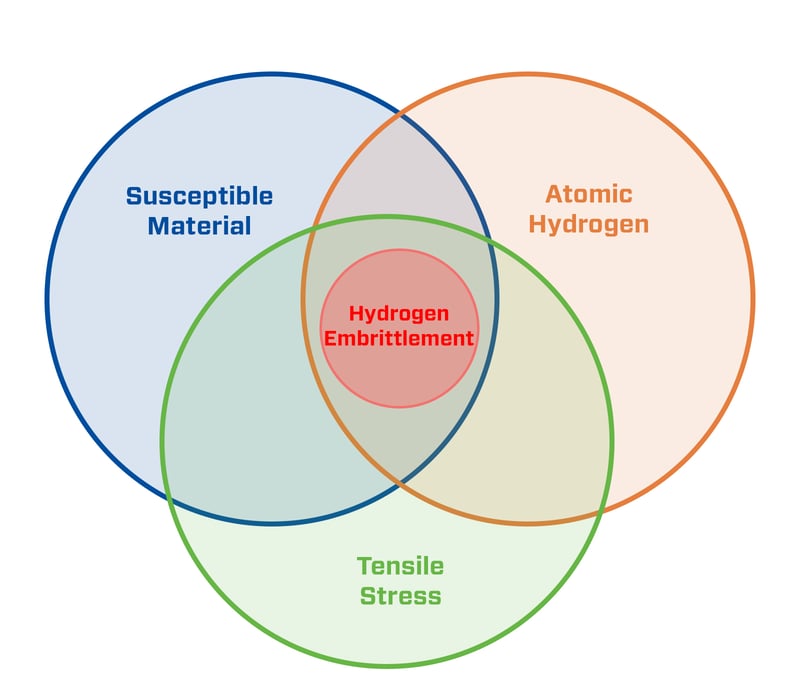
Figure 2: Three essential factors are required for Hydrogen Embrittlement (HE) to occur. HE happens when these three conditions overlap.
Why austenitic stainless steels are often preferred
In hydrogen systems, the dominant material risk is hydrogen embrittlement; a failure mechanism that can lead to sudden, brittle cracking without warning. Material selection should therefore prioritise resistance to embrittlement above all else.
Austenitic stainless steels directly address this risk. Their face-centred cubic (FCC) structure provides inherent resistance to hydrogen embrittlement, maintaining ductility and structural integrity even when hydrogen is present. This makes them fundamentally more reliable than ferritic steels and many higher-strength alternatives, which are significantly more vulnerable to hydrogen-induced cracking – as well as to low-temperature embrittlement.
For this reason, austenitic grades such as 316/316L stainless steel are widely regarded as the preferred solution for hydrogen service. In addition to embrittlement resistance, they retain toughness at low temperatures and offer strong corrosion resistance – both critical where long-term durability and reliability matter. However, not all stainless steels – or even all versions of the same grade – will perform equally.
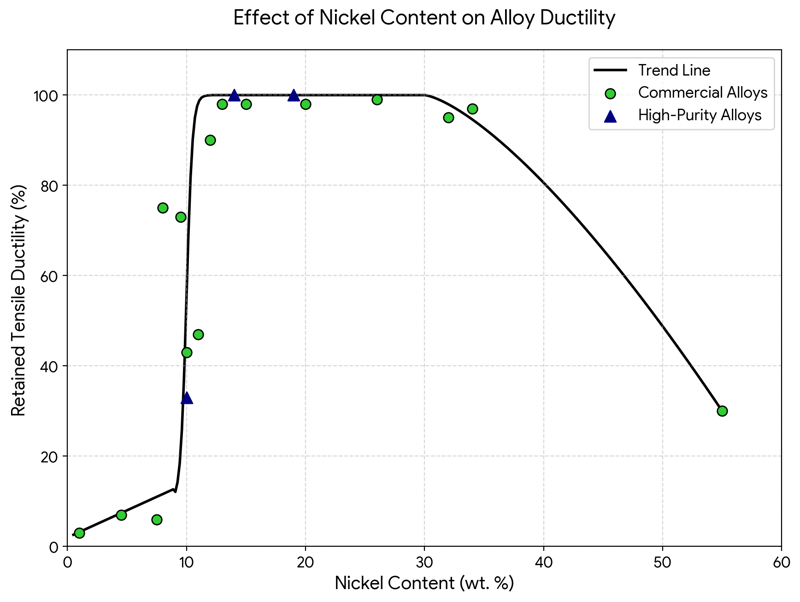
Figure 3: Ferritic alloys with very low nickel content become significantly embrittled, while austenitic alloys between 10% and 30% nickel show relatively little embrittlement.
Why 316 stainless steel chemistry matters
One of the most important points in hydrogen material selection is that not all 316 stainless steel is the same. Subtle variations in alloy chemistry can significantly influence how well the material performs in hydrogen service over time.
Nickel content is particularly important. Higher nickel levels help stabilise the austenitic microstructure, which is directly linked to improved resistance to hydrogen-induced damage. For customers, that means material quality and chemistry control should be considered alongside nominal grade – because in hydrogen environments, small differences in composition can have a disproportionate impact on long-term reliability and safety.
Nickel content helps stabilise the microstructure of stainless steel, enabling it to be more resistant to hydrogen embrittlement. In our testing, we have found hydrogen embrittlement’s effect on tensile ductility in 316 stainless steel with 12% Ni was found to be minor.
316 stainless steel with a minimum of 12% nickel is better suited for the unique challenges of hydrogen.
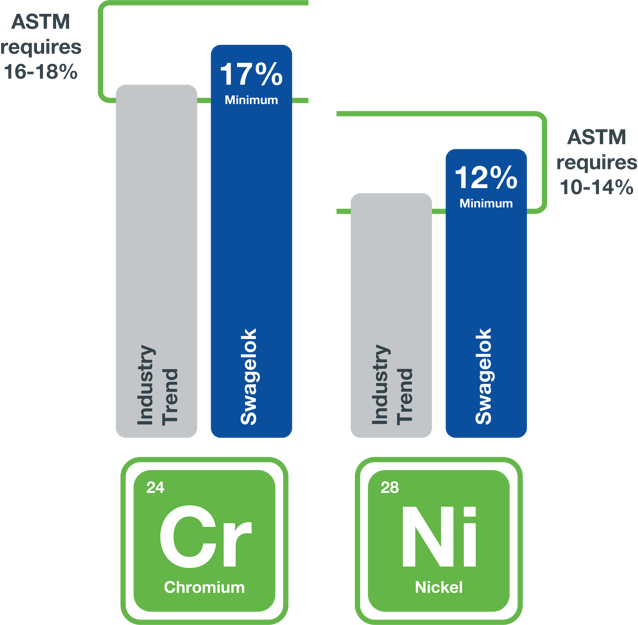
Figure 4. Stainless steel with higher levels of nickel content can help prevent hydrogen embrittlement.
Material selection must reflect real operating conditions
Hydrogen compatibility is always application-specific. Good specification decisions should account for:
-
Whether the system handles gaseous or liquid hydrogen
-
Pressure range and decompression effects
-
Temperature extremes and thermal cycling
-
Vibration and fatigue loading
-
Environmental conditions that may contribute to corrosion or degradation
Pressure capability alone is not enough. A component may be rated for the required pressure, but that doesn't automatically mean it's optimised for hydrogen sealing performance or cyclic duty.
Why connection design matters
Material selection is only part of the picture. In hydrogen systems, connection design also plays a major role in achieving safe, reliable performance.
Because hydrogen can escape through extremely small gaps, system designers should aim to minimise potential leak paths from the outset. That includes reducing unnecessary joints, simplifying tubing routes, and selecting connection technologies suited to hydrogen service.
The overall objective is not just to build a system that works on day one, but one that continues to perform reliably over time.
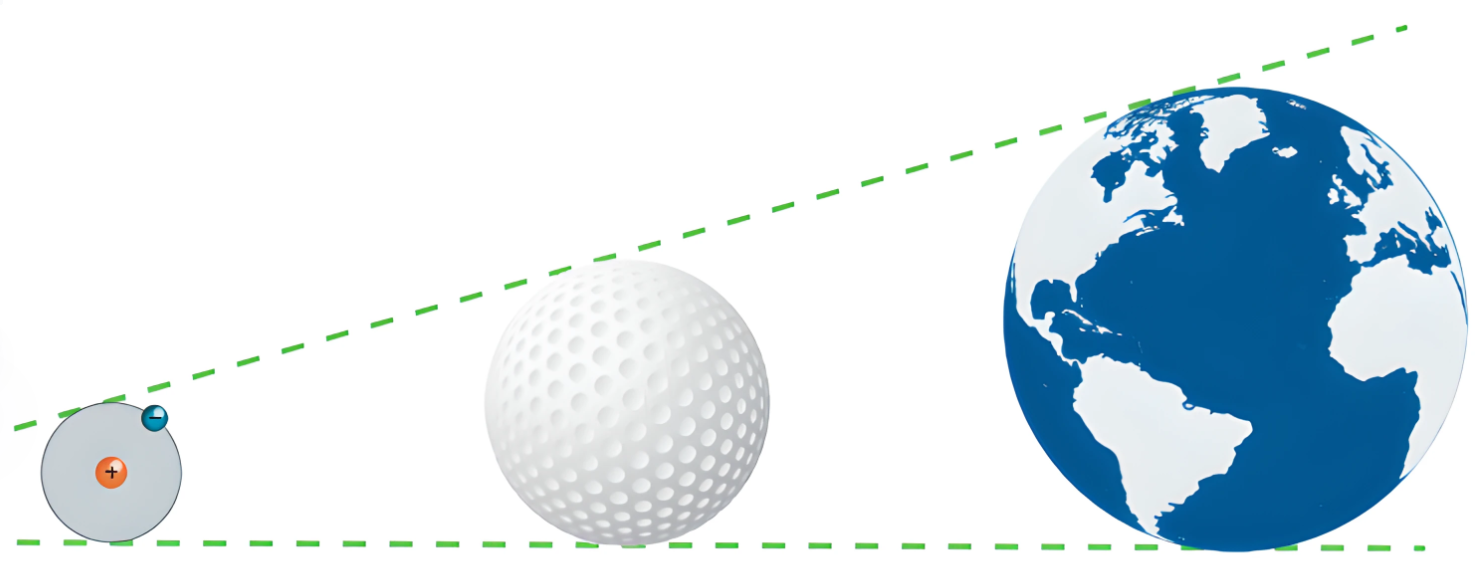
Figure 5: The size of a single hydrogen atom compared to a golf ball is the same ratio as a golf ball compared to that of the Earth.
What to look for in hydrogen components
When selecting fittings and related components for hydrogen applications, engineers should consider more than pressure rating. Important factors include:
-
Seal integrity
-
Resistance to vibration and thermal variation
-
Tube grip strength in high-pressure service
-
Material integrity in hydrogen environments
-
Consistent, repeatable installation
These factors can make a meaningful difference to safety, maintenance demands, and whole-life performance, particularly in high-pressure or high-cycle systems.
Supporting reliable hydrogen systems with quality components
This is where product quality becomes especially important. High-quality materials, well-engineered connection design, and controlled manufacturing standards all contribute to stronger performance in hydrogen service.
Swagelok solutions such as 316/316L stainless steel components and fittings can help address key hydrogen design challenges, including leak-tight sealing, durability, and performance in demanding operating environments. Supported by broader fluid system expertise – from valves and regulators to hoses, filters, training, and advisory services – customers can take a more complete approach to hydrogen system reliability.
Why expertise matters
Hydrogen material selection is not a box-ticking exercise. It requires an understanding of how materials, connections, and operating conditions interact across the full system.
That's why customers benefit from working with a partner that can help evaluate the whole application – not just individual components. At Swagelok Central UK, that means helping customers make informed decisions that reduce risk, improve performance, and support reliable operation over the life of the system.
Final thoughts
Successful hydrogen systems depend on more than choosing a corrosion-resistant alloy. They require thoughtful material selection, appropriate connection technology, and a clear understanding of the real service environment.
To explore how these principles apply to your application, speak to one of our technical engineers who can help you evaluate materials, sealing, and long-term performance.

