Analytical System Integrity Checklist
Your analyser is only as good as the sample it never sees coming
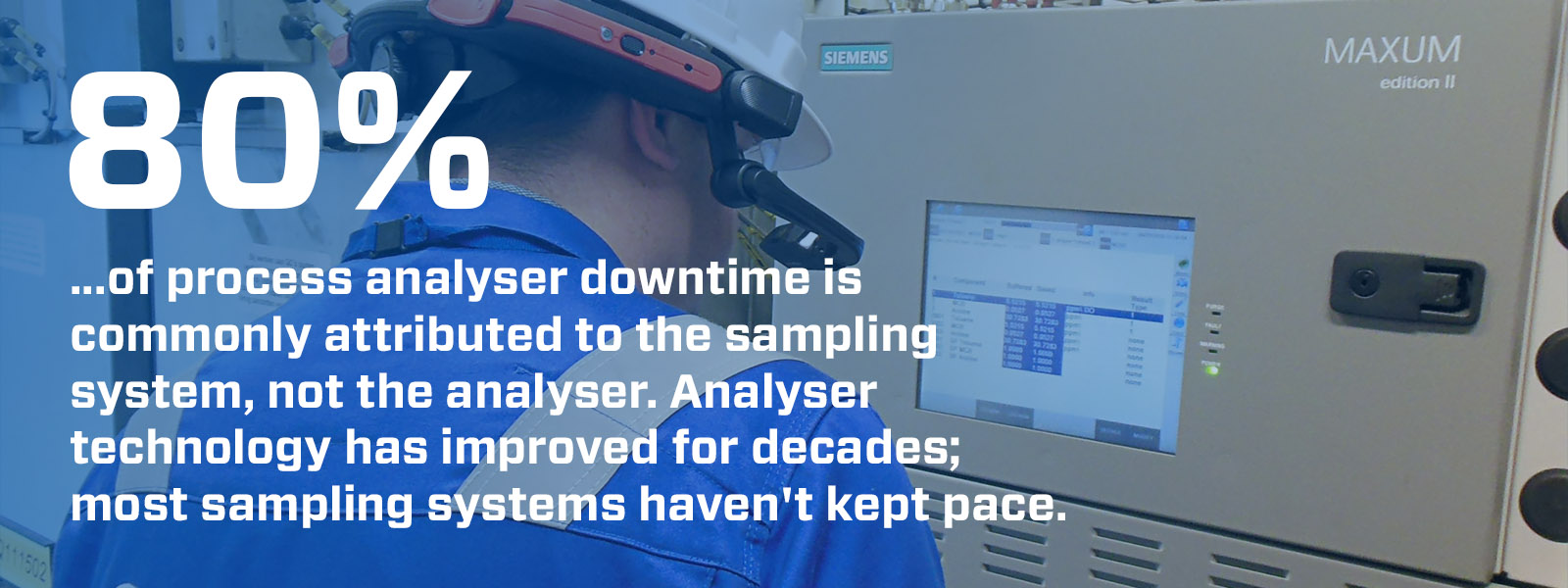
Modern process analysers are reliable. The sampling systems feeding them sometimes aren't, and that gap is where a lot of analyser downtime actually lives. This checklist gives you a structured way to find out where your systems stand.

Why a checklist, and why now
Process analysers have quietly become some of the best-engineered instruments on a plant.
Sampling systems – the taps, transport lines, conditioning enclosures, and disposal paths that get the sample to the analyser – have mostly stayed exactly as they were decades ago. That mismatch is expensive: it shows up as unplanned maintenance, unreliable data, and control loops running on measurements nobody fully trusts.
The upside is that most installed systems are so far below best practice that meaningful improvement doesn't take a research project, it takes a structured look at the right things, in the right order.
This checklist is that structured look: a working tool for design review, pre-purchase specification, or a walk-down audit of what's already installed.
The six goals of sampling excellence
Part 1: Analytical Integrity
Analytical goals: does the sample support a valid measurement?
1. Compatible: the sample won't harm the analyser and won't prevent it from producing a reliable result.2. Timely: the measurement arrives with an acceptable delay from real time, early enough to still act on.
3. Representative: the result reflects the process property you're trying to measure.
Part 2: Operational Integrity
Operational goals: does it keep delivering, safely and affordably?
4. Reliable: the measurement is available whenever the plant is running and ready to receive it.5. Cost-effective: the system delivers its benefits at the lowest overall cost, not the lowest price.
6. Safe: negligible additional risk to people, assets, or the environment, at all times.
Part 3: Root-Cause Prevention
Four habits that keep sampling systems unreliable
Specifying by accident: without a detailed specification being issued to potential suppliers before the procurement process starts, the lowest bidder may also be the one offering the least engineering effort.
Designing in isolation: a beautifully built conditioning enclosure means little if the tap, transport line, or disposal path it connects to was never reviewed as part of the same system.
Fixing without authority: unauthorised field changes, made without a Management of Change process, routinely cause more problems than they solve.
No feedback loop: when designers never hear what went wrong on-site, the same mistakes (and the same ‘industry standard’ workarounds) get repeated on the next project.

The takeaway
An analyser can only report on the sample it receives. Before assuming an unexpected reading is caused by an instrument fault, work backwards through the sample's journey and ask whether it is timely, representative and being delivered under stable, compatible conditions.
Problems introduced during sample extraction, transport, conditioning and delivery can undermine a correctly functioning analyser.
If you'd like a second pair of eyes on an existing system, or you're designing one from scratch, Swagelok Central UK's field engineering team can review your sampling system end to end and help identify opportunities to improve sampling-system reliability.
Still not sure if it's the analyser or the sample? Discuss your challenges with our field engineers.